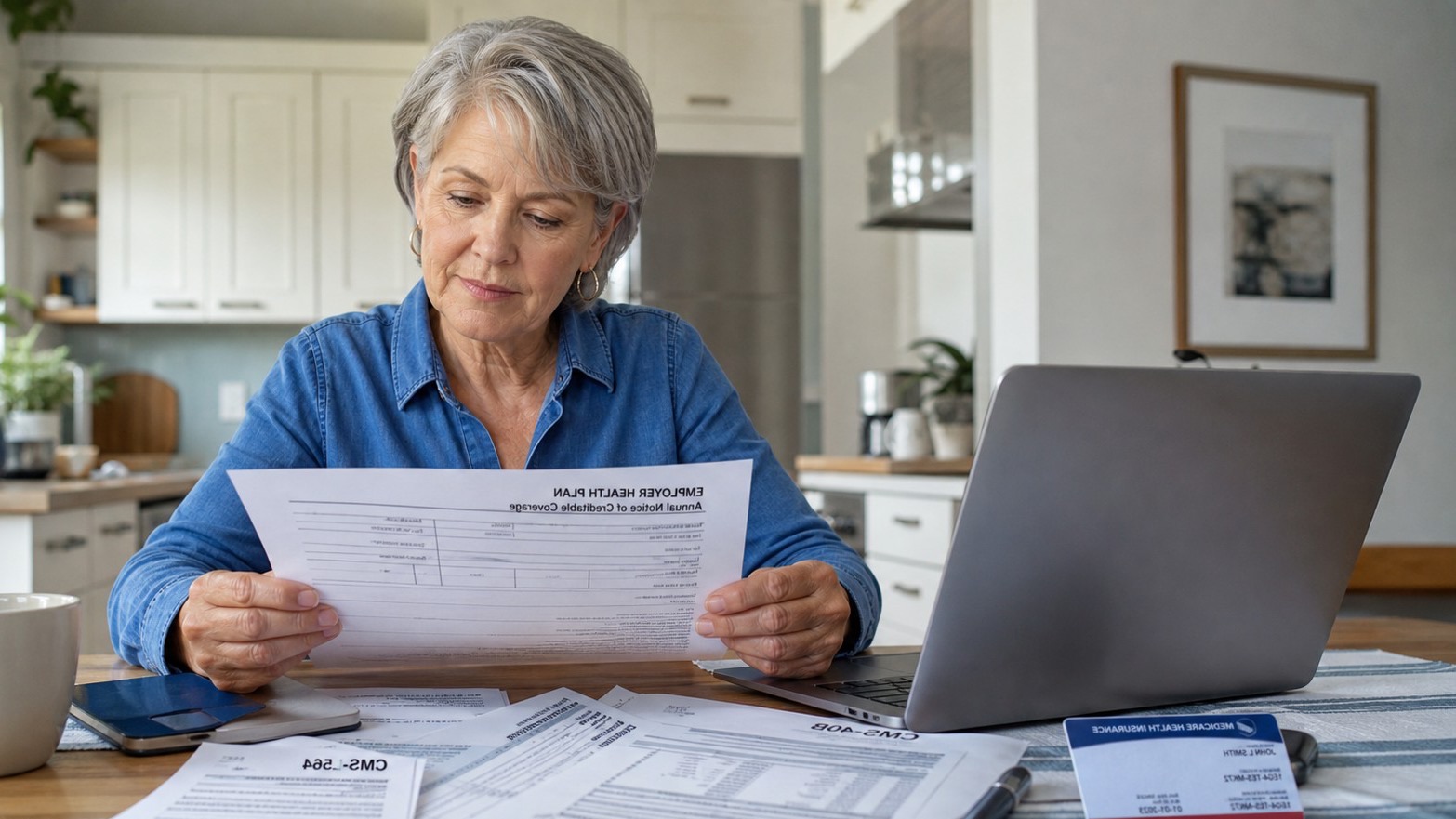
Usually, active federal employees with FEHB do not need to enroll in Medicare Part B at 65.
OPM says FEHB pays first for current federal employees, and OPM specifically says active employees can defer Part B until retirement. The decision changes once you retire. At that point, Medicare usually pays first, FEHB pays second, and you need to decide whether paying the 2026 Part B premium of $202.90 per month is worth it for your situation.
That is the short answer. The real mistake is assuming the same rule applies before and after retirement.
Do Federal Employees Have To Take Medicare Part B at 65?
Usually, no if you are still actively working and covered by FEHB.
Usually, maybe if you are retired or retiring soon.
That split matters more than most federal workers expect.
For active employees, OPM says FEHB is primary coverage and you can defer Part B. For annuitants, OPM says Medicare pays first and FEHB pays second if you enroll in Medicare. FEHB can continue either way, but the cost and billing setup change once you are retired.
Official sources:
- OPM Medicare guidance for active federal employees
- OPM Medicare guidance for annuitants
- Medicare & You 2026 handbook
If You Are Still Working in a Federal Job at 65
This is the easier call.
If you are a current federal employee covered by FEHB, OPM says FEHB is your primary coverage. OPM also says you can save money by deferring Part B until retirement.
That means many federal workers do this:
- enroll in premium-free Part A at 65
- delay Part B
- keep FEHB as primary coverage while still working
- use a Special Enrollment Period to add Part B later if retirement makes it worthwhile
There is one major exception to watch: HSA contributions.
If you are in a high-deductible FEHB plan with a Health Savings Account and want to keep contributing, enrolling in any part of Medicare, including premium-free Part A, can create tax problems. If that is your setup, read Medicare and HSA Contributions After 65: The Tax Trap Many Missouri Workers Miss before you enroll in anything.
If you are generally sorting through work-after-65 rules first, these articles help:
- Do You Need Medicare at 65 If You’re Still Working? Missouri Rules
- What Is Creditable Coverage for Medicare?
- Can You Stay on Your Spouse’s Health Insurance Instead of Medicare at 65?
What Changes When a Federal Employee Retires?
This is where the Medicare decision becomes real.
Once you retire, the clean active-employee rule is gone. Medicare generally becomes primary and FEHB becomes secondary.
At that point, the question is no longer “Am I allowed to delay Part B while working?”
The question becomes:
Does paying for Part B improve my total coverage enough to justify the premium?
OPM says FEHB coverage continues whether or not you enroll in Medicare. OPM also says some FEHB plans offer Part B premium reimbursement or waive some cost-sharing when you have Part B. Other FEHB plans do much less with Medicare coordination.
That is why there is no honest one-size-fits-all answer for retirees. The right answer depends on:
- your FEHB plan
- how often you use care
- whether you want lower out-of-pocket exposure
- whether your FEHB plan offers meaningful Part B incentives
- whether you are comfortable paying the monthly Part B premium
Should Retired Federal Employees Enroll in Part B?
Often, yes. But not automatically.
Part B can make a lot of sense for a retired federal worker when:
- the FEHB plan reimburses part or all of the Part B premium
- the FEHB plan waives deductibles, copays, or coinsurance once Medicare is primary
- you use outpatient care regularly
- you want broader provider flexibility, especially outside an FEHB HMO network
OPM specifically notes that some services covered by Part B may not be fully covered by the FEHB plan alone, such as durable medical equipment, home health care, and certain supplies. OPM also notes that some FEHB HMOs allow broader reimbursement outside the HMO network once you have Part B.
The weaker case for Part B is usually when:
- your FEHB plan already leaves you with costs you are comfortable with
- the plan offers little or no Part B reimbursement
- your expected medical usage is low
- the added monthly premium feels too expensive for the value you would get
This is a cost tradeoff, not a moral one. Some retirees are better off with Part B. Others keep FEHB alone and accept the tradeoff.
Can a Federal Retiree Keep FEHB Without Medicare Part B?
Yes. Under regular FEHB rules, your FEHB coverage can continue whether or not you enroll in Medicare Part B.
That is the part many people miss. FEHB does not force most retirees into Part B the way some people assume.
But this does not mean delaying Part B has no consequence.
If you decline Part B at 65 as a retiree and later change your mind, OPM warns that your enrollment opportunities can be limited. Medicare can also apply the Part B late enrollment penalty if you did not have the right kind of active-employment coverage protecting you.
If you want the penalty mechanics explained more directly, read What Happens If You Do Not Sign Up for Medicare at 65?.
What About the Part B Late Enrollment Penalty for Federal Workers?
This depends on whether you are still an active employee or already an annuitant.
If you are actively working and covered by FEHB, OPM says you get a Special Enrollment Period to take Part B later without the late enrollment penalty when the work or employer coverage ends.
If you are retired and simply choose not to take Part B when first eligible, that protection usually does not work the same way.
That is why a federal worker who retires at 67 and declines Part B should not assume they can casually pick it up at 70 with no downside.
If you are retiring after 65 and need the step-by-step enrollment path, start here:
- How Long Do You Have to Sign Up for Medicare After You Retire?
- How to Apply for Medicare Part B After Employer Coverage Ends
Do Federal Employees Need Medicare Part D Too?
Usually, no.
Medicare says FEHB plans include creditable prescription drug coverage. That means most federal employees and retirees do not need to enroll in a separate Part D plan just to avoid the Part D late enrollment penalty.
This is important because people sometimes assume they should sign up for every part of Medicare at once. With FEHB, that is usually not true.
You can keep FEHB drug coverage, and if you later decide to add Part D, Medicare says you can generally do that without penalty as long as you do not go more than 63 days without other creditable drug coverage.
If you need the Part D background first, these two guides help:
Important Exception: Postal Retirees Are Different Now
This article is about FEHB.
If you are a U.S. Postal Service retiree or family member now covered under PSHB instead of FEHB, the rule can be different. OPM says many Medicare-eligible PSHB annuitants must enroll in Part B to keep PSHB coverage in retirement, unless they qualify for a listed exception.
So if you are postal, do not use general FEHB advice as your final answer.
Use OPM’s PSHB Medicare page first:
A Simple Way To Think About the FEHB and Part B Decision
For most federal workers, the clean version is:
Active federal employee at 65
FEHB usually pays first. Part B is usually optional, and delaying it is often reasonable.
Retired federal employee at 65
FEHB can stay in place without Part B, but Medicare becomes the main coordination question. At that point, you should compare the Part B premium against your likely claims, FEHB cost-sharing, and any reimbursement your FEHB plan offers.
That is the part worth doing carefully instead of from memory.
What I Would Verify Before a Federal Worker Makes This Choice
For federal workers and retirees in Blue Springs, Independence, Lee’s Summit, and the broader Kansas City metro, I would want these five things confirmed:
- are you still an active employee or already retired
- do you want to enroll in premium-free Part A
- are HSA contributions still in play
- does your FEHB plan offer Part B reimbursement or major cost-sharing reductions
- if you are retiring, what month will your active employee coverage end
Those details matter more than general online advice.
If you want a structured way to sort those moving parts, use the Medicare Readiness Checklist.
Frequently Asked Questions
Do federal employees need Medicare Part B at 65?
Usually not if they are still actively working and covered by FEHB. OPM says active federal employees can generally defer Part B until retirement.
Should retired federal employees enroll in Medicare Part B?
Often yes, but it depends on the FEHB plan, expected medical usage, and whether the plan offers Part B reimbursement or lower cost-sharing when Medicare is primary.
Can I keep FEHB if I do not take Medicare Part B?
Usually yes for standard FEHB retirees. OPM says FEHB coverage continues whether or not you enroll in Medicare. Postal retirees in PSHB can face different rules.
Do FEHB retirees need Medicare Part D?
Usually no. Medicare says FEHB includes creditable prescription drug coverage, so most federal employees and retirees do not need separate Part D just to avoid a penalty.
What form do I need if I retire after 65 and want Part B later?
OPM says retiring federal workers should ask their employing office to complete CMS-L564 to help enroll in Part B during the Special Enrollment Period.